

The Arab world is rich in unique natural treasures that have, throughout history, represented a valuable heritage and a symbol of wealth and ecological distinction. From vast palm oases to coastlines and mountains, the region yields some of the most precious aromatic and medicinal resources.
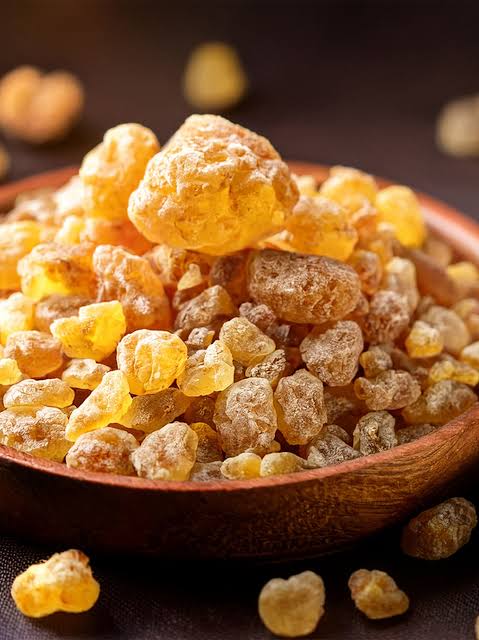
Among these natural treasures, deeply rooted in the geography of the region, frankincense stands out as one of the Earth’s most remarkable and ancient gifts. For thousands of years, frankincense has been far more than a fragrant substance. It has served as a vital commodity in international trade, an essential component of religious rituals, and a fundamental element of traditional medicine across numerous ancient civilizations.
Scientifically, frankincense is the aromatic resin obtained from trees of the genus Boswellia. It has long occupied a distinguished position in the Arab world and throughout the ancient world. Species such as Boswellia frereana, native to Somalia, are renowned for producing high-quality resin in the form of large, hardened droplets known as resin tears. These have traditionally been used as chewing gum in the Arab world, a practice that continues to this day.
Ancient history gave rise to major trade routes specifically designed to transport these “golden tears” from their origins in the Arabian Peninsula and the Horn of Africa to the palaces and temples of ancient Egypt, Mesopotamia, and the Greek and Roman empires.
Today, while frankincense retains its distinguished historical status, it has acquired important modern applications in luxury perfumery, aromatherapy, and alternative medicine. Amid this rich heritage, contemporary scientific research continues to investigate the chemistry of these aromatic resins, seeking to connect ancient traditions with precise laboratory analysis in order to establish their identities and chemical profiles with greater accuracy.
The Most Famous Types of Frankincense and Their Names
Frankincense comes in several varieties, with their names and characteristics depending on the botanical species within the genus Boswellia and the geographical environments in which these trees grow and adapt to arid conditions. The following are some of the most notable types and their chemical characteristics.
1. Boswellia papyrifera
This species is found primarily in Ethiopia, Eritrea, and Sudan.
The essential oil extracted from its resin is characterized by a clear predominance of octyl acetate, with octanol present at lower concentrations.
2. Boswellia sacra/Boswellia carteri
This species occurs in Oman, Yemen, and Somalia.
Its essential oil exhibits a variable chemical composition, commonly dominated by alpha-pinene, alpha-thujene, or limonene. These compounds are often accompanied by appreciable quantities of myrcene, sabinene, veridiflorol, beta-caryophyllene, or para-cymene.
3. Boswellia frereana
Native to Somalia, this is one of the most widely traded and well-known frankincense species in the world.
Locally and internationally, it is known as Maydi. It produces large resin droplets that have traditionally been used as chewing gum throughout the Arab world.
Recent chemical analyses of samples collected from individual trees have revealed a distinctive chemical profile, characterized by moderate to high concentrations of alpha-thujene (14.5%–43.9%) and widely varying but sometimes substantial concentrations of alpha-pinene (3.0%–63.0%). The samples were entirely free of methoxyalkanes.
4. Boswellia occulta
This species was documented more recently in Somalia. Its essential oil is notable for its high content of methoxydecane and methoxyoctane, unusual compounds that are rarely encountered in plant essential oils.
Commercially, resins from this species are often mixed with those of B. frereana and B. sacra.
What Do the Presence of These Compounds and Their Concentrations Mean?
To address this scientific question, a recent study by Johnson and colleagues, published in 2021 through the Aromatic Plant Research Center in the United States, investigated the subject under the title:
The Chemical Composition of Single-Tree Boswellia frereana Resin Samples.
The study sought to overcome the limitations of earlier research, which had relied primarily on mixed commercial samples. Instead, the researchers conducted a detailed analysis of samples collected directly from 12 individual Boswellia frereana trees in Somalia.
The presence and relative concentrations of these compounds help reveal the plant’s chemical profile and clarify how its constituents are distributed between essential oils and dichloromethane extracts.
The following section outlines the principal compounds discussed in the study, together with their reported aromatic characteristics and potential therapeutic relevance according to the scientific literature.
1. Alpha-Thujene
Concentration: The study reported concentrations ranging from 14.5% to 43.9% in essential oils and from 3.6% to 12.9% in extracts.
Aromatic profile: Alpha-thujene contributes sharp, clean, woody, herbal, and fresh facets, with an aroma reminiscent of pine and subtle spices.
Potential therapeutic relevance: Research has investigated its antimicrobial and anti-inflammatory properties. Its presence may contribute to the biological activity of essential oils used in aromatherapy, although the extent of any therapeutic benefit depends on the preparation, dosage, and available clinical evidence.
2. Alpha-Pinene
Concentration: The study recorded substantial variation, ranging from 3.0% to 63.0% in essential oils and from 0.4% to 13.9% in extracts.
Aromatic profile: Alpha-pinene has a strong, fresh, clean, and distinctly pine-like aroma. It is one of the characteristic aromatic compounds associated with pine trees and traditional frankincense.
Potential therapeutic relevance: Research has examined alpha-pinene for its possible bronchodilatory, anti-inflammatory, and expectorant effects. Other studies have explored its potential relationship with memory, mental alertness, and stress. These findings should not, however, be interpreted as proof that inhaling frankincense provides established clinical benefits for these conditions.
3. Limonene
Concentration: The study reported concentrations ranging from 0.5% to 2.7%.
Aromatic profile: Limonene has a bright, fresh citrus aroma reminiscent of lemon and orange peel. In perfumery, it can contribute a lively, sparkling, and uplifting character.
Potential therapeutic relevance: Limonene has been investigated for its antioxidant properties and potential effects on anxiety and other biological processes. Research into its possible influence on mood and immune function remains an evolving field, and such effects should not be assumed from the mere presence of limonene in frankincense.
4. Methoxydecane
Concentration: Methoxydecane was not detected in the samples examined in this study. The researchers attributed its reported presence in some earlier studies to possible adulteration or the mixing of different frankincense species, including Boswellia occulta, which grows in Somalia.
Scientific significance: Methoxydecane is an unusual ether-containing alkane compound that is rarely encountered in plants. It has been identified as a particularly distinctive chemical marker associated with Boswellia occulta.
Its detection in certain commercial oils incorrectly attributed to other species may indicate that resins from different botanical sources have been mixed during commercial processing.
Aromatic profile: The compound has a distinctive, sharp aromatic signature that may contribute to noticeable differences in the smell of products containing mixed resins.
5. Lupeol
Concentration: Lupeol was identified as one of the principal triterpenoid constituents in the extracts, with concentrations ranging from 14.7% to 32.5%.
Aromatic profile: Because lupeol is a non-volatile compound, it does not contribute directly to the airborne fragrance perceived when smelling frankincense. Instead, it forms part of the resin’s non-volatile chemical matrix and may influence its physical characteristics.
Potential therapeutic relevance: Lupeol has attracted considerable medical research interest because of its potential anti-inflammatory, antioxidant, wound-healing, and other biological activities. Its possible anticancer effects are also being investigated. However, these research findings do not establish that frankincense itself is an effective treatment for cancer or other diseases.
6. Alpha-Amyrin and Beta-Amyrin
Concentration: In the extracts examined, alpha-amyrin ranged from 13.0% to 25.2%, while beta-amyrin ranged from 5.3% to 8.0%.
Aromatic and physical characteristics: These non-volatile resin constituents do not directly contribute to the fragrance carried through the air. Instead, they are associated with the physical properties of the resin, including its texture when chewed or burned.
Potential therapeutic relevance: Pharmacological research has investigated amyrin compounds for their potential anti-inflammatory and analgesic effects, as well as possible roles in liver protection and reducing oxidative stress. Some experimental findings suggest biological activities comparable in certain respects to those of established analgesic agents, but their clinical significance requires further investigation.
7. 3-Epi-Lupeol
Concentration: The study recorded appreciable and relatively consistent concentrations of 3-epi-lupeol in the extracts, ranging from 6.4% to 14.2%.
Potential therapeutic relevance: As a derivative of lupeol, 3-epi-lupeol contributes to the complex triterpenoid composition of frankincense resin. Research has explored its potential biological activity, including anti-inflammatory and anticancer effects. These remain research findings rather than established therapeutic applications.
Conclusion
This study provides a clearer scientific picture of what distinguishes authentic Boswellia frereana frankincense from other varieties. By examining samples from a single, traceable source and analyzing each tree individually, the researchers established a valuable chemical reference profile for the species. At the same time, their findings highlighted the possibility of commercial mixing that may have complicated the results of earlier studies.
The practical conclusion is that authentic Boswellia frereana is characterized by alpha-pinene and alpha-thujene in its essential oil, alongside lupeol and amyrins in its resin, and an absence of methoxydecane in the samples examined.
Natural variation between individual trees can be substantial. Consequently, gas chromatography–mass spectrometry (GC–MS) analysis of each batch is among the most useful methods for assessing chemical composition and supporting authenticity and quality control.
These findings matter to both perfumers and consumers. Perfumers need to understand the expected chemical characteristics of their raw materials to formulate fragrances with greater consistency, while consumers deserve to receive authentic frankincense that corresponds to the identity and quality claimed by its supplier.
In a market where botanical species and commercial names can become confused, precise scientific knowledge remains one of the most reliable tools for understanding the authenticity, aromatic character, and potential value of Somali frankincense.